Complex roof area used efficiently: Full optimization with the M605-M
Not every roof offers ideal conditions for a photovoltaic system. Limited space, different roof orientations, or dormers with varying tilt angles can make system planning significantly more challenging. At the same time, projects like these demonstrate the importance of flexible system design in making the best possible use of the available roof area for electricity generation.
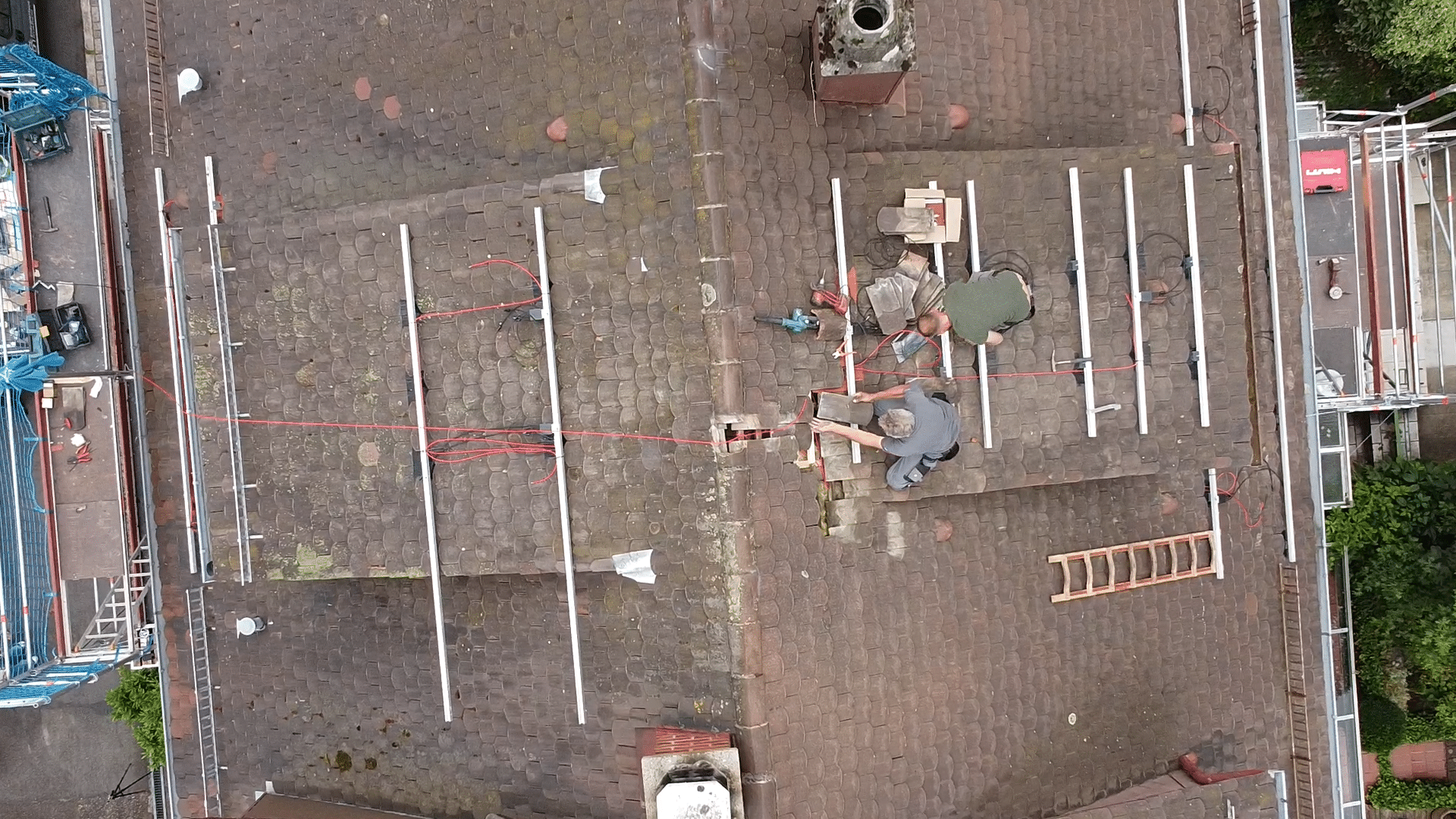
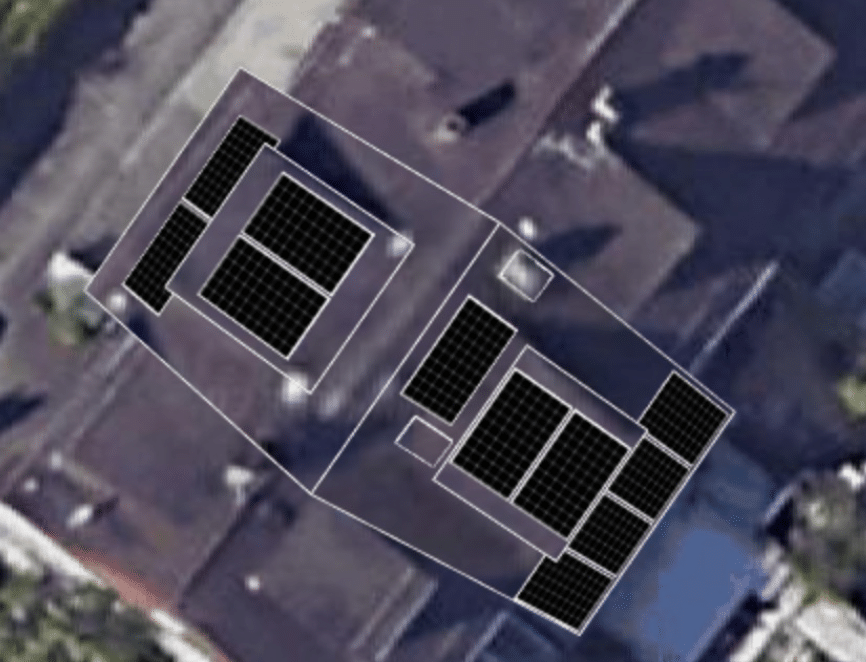
In this Energiehaus Pforzheim project, several of these challenges came together. Only eleven module positions were available in total. These were distributed across two different roof orientations, with some modules installed on dormers with different tilt angles.
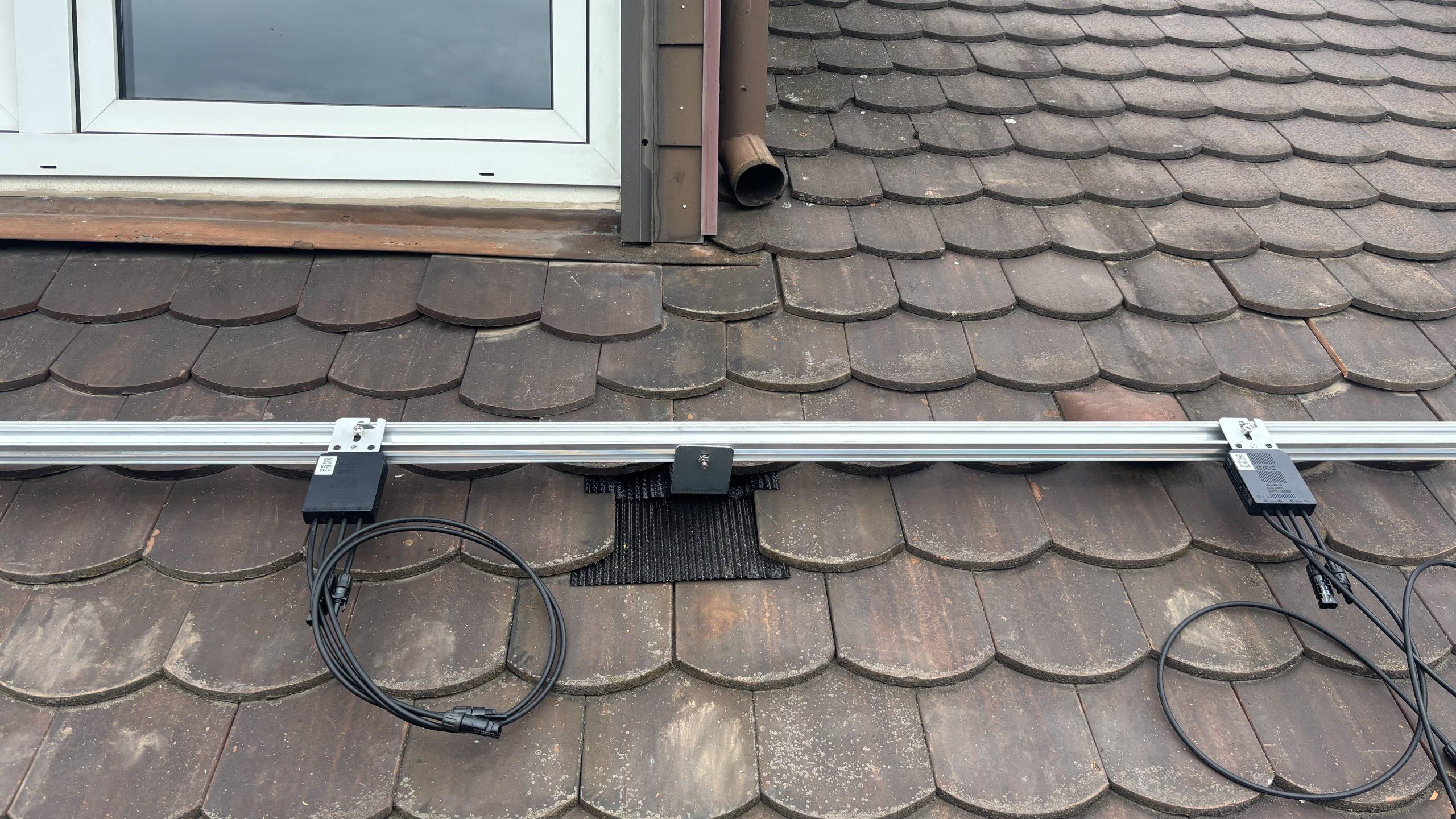
To achieve the most efficient solution possible under these conditions, the entire system was equipped with BRC Solar’s latest generation of optimizers, the Power Optimizer M605-M.
The initial situation
A total of 11 AIKO Neostar 3S+ glass-glass modules, each with a power output of 475 Wp, were installed on the available roof area.
Inverter
- Fronius Symo GEN24 4.0 Plus
Southeast orientation
- 7 modules
- including 2 modules on a dormer
Northwest orientation
- 4 modules
- including 2 modules on a dormer
Installed capacity
- 5.225 kWp
The main challenge therefore was not simply the different orientations. The dormers introduced additional tilt angles, meaning that the individual modules were exposed to different levels of solar irradiation.
At the same time, the system design required all modules to operate together in a single string.
The solution: Full optimization with the M605-M
For this project, all eleven modules were equipped with BRC Power Optimizers M605-M. The key advantage is that different performance conditions of individual modules can be taken into account in a targeted way. Especially on a roof like this, where orientation and tilt angles vary, module-level optimization provides additional flexibility in system design.
Instead of having to leave potentially suitable module areas unused, available roof sections can be integrated more effectively into the overall system concept. This is particularly relevant when only a limited number of module positions are available, meaning that every single module contributes to the system’s overall performance.
Free choice of inverter as an important factor
Another key consideration during the planning process was the choice of inverter. A Fronius Symo GEN24 4.0 Plus was selected for the system. The inverter-independent design of the BRC Power Optimizers provided the necessary flexibility, allowing the selected Fronius inverter to be easily combined with the optimization solution.
According to information from the project, this flexibility was one of the main reasons for choosing BRC optimizers.
Module-level monitoring
With the new generation of the M605-M, monitoring played an important role in this project alongside optimization. Communication is handled via powerline technology, enabling data transmission between the optimizers and the system without an additional wireless connection.
The system can then be monitored via the free BRC Power Manager App. Especially in a system with different orientations and tilt angles, module-level monitoring offers an additional advantage: the performance of individual modules can be tracked, providing greater transparency when monitoring the system.
According to the installer, setting up the system and the Power Manager App was straightforward for this project.
Why BRC Solar again?
For Energiehaus Pforzheim, this was not the first project using BRC Power Optimizers. Systems using the products had already been implemented in the past. Key reasons for choosing them again included their intuitive handling during installation and commissioning, as well as the flexibility of the system.
Depending on the system design, BRC optimizers can be used either for full optimization or selectively where optimization is actually required.
In this case, the close proximity was another advantage: Energiehaus Pforzheim and BRC Solar in Ettlingen are only a few kilometres apart. This is complemented by BRC Solar’s German-speaking support team, which is directly available for technical questions as well as during system planning and commissioning.
A solution for roofs that do not meet ideal conditions
The key feature of this project lies primarily in its initial conditions. Eleven modules, two roof orientations, and additional differences in tilt angles caused by several dormers clearly demonstrate that a PV system cannot always be planned on a large, uniform roof surface.
For projects like this, flexibility at module level becomes particularly important. Equipping the entire system with the M605-M makes it possible to address the different conditions within the system in a targeted manner while still using the preferred inverter. The result is a system configuration that makes consistent use of the available roof area instead of excluding more challenging sections from the outset.
Conclusion
This practical example shows that even small and challenging roof areas can be used effectively for photovoltaics.
For the system in Pforzheim, the challenge was to combine eleven modules with different orientations and tilt angles into a single system design. Equipping the entire system with the BRC Power Optimizer M605-M provides the necessary flexibility at module level, while also enabling the use of the selected Fronius inverter and individual module monitoring.
The project therefore exemplifies an approach that is at the heart of BRC Solar: making as many roof areas as possible suitable for photovoltaics, even when the structural conditions do not correspond to the typical ideal scenario.